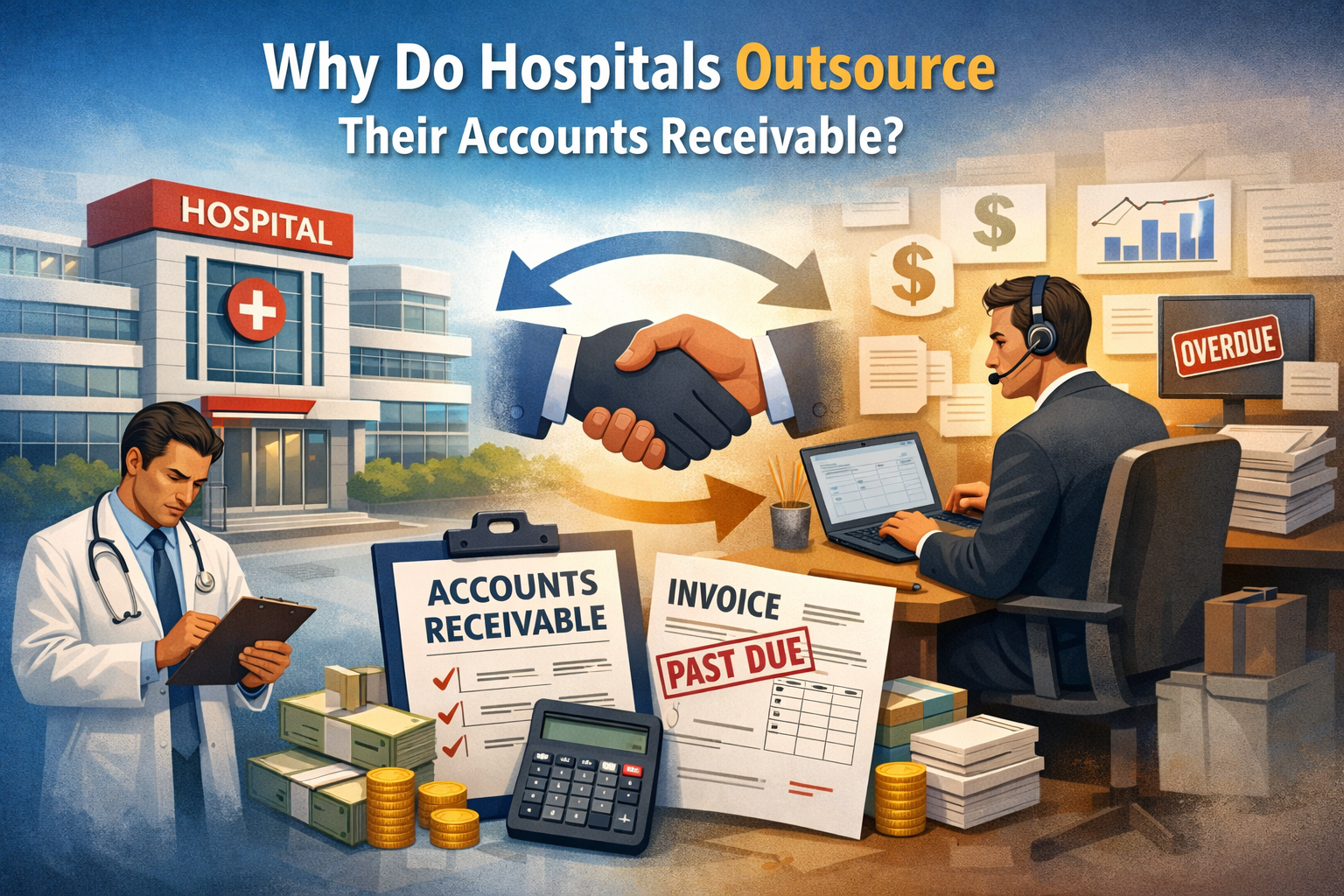

Are delayed payments and rising administrative costs hurting your hospital’s financial health? You’re not alone. Many healthcare providers struggle with inefficient billing systems, claim denials, and slow reimbursements. This is why outsourcing accounts receivable has become a strategic solution for hospitals looking to improve cash flow and reduce operational stress.
In today’s competitive healthcare environment, hospitals are increasingly turning to specialized partners to handle their revenue cycle. But why exactly do hospitals outsource their accounts receivable, and is it the right choice for your organization? Let’s explore.
What Is Accounts Receivable Outsourcing in Healthcare?
Accounts receivable (AR) outsourcing in healthcare refers to hiring a third-party service provider to manage and collect outstanding payments from patients and insurance companies.
Instead of handling billing, follow-ups, and collections internally, hospitals delegate these tasks to experts who specialize in medical billing and revenue cycle management.
Key Responsibilities of AR Outsourcing Providers:
Key responsibilities of AR outsourcing providers include:
- Claim submission and tracking
- Insurance follow-ups
- Denial management and appeals
- Patient billing and collections
- Payment posting and reporting
This allows hospitals to focus more on patient care while experts handle the financial side.
Why Is Accounts Receivable Outsourcing Important?
Outsourcing accounts receivable is not just about reducing workload—it’s about improving financial performance and operational efficiency.
Here’s why it matters:
- Rising complexity in medical billing: Constant changes in coding and insurance policies make in-house management challenging.
- Delayed reimbursements: Slow payments can disrupt cash flow and affect daily operations.
- High administrative burden: Managing AR internally requires trained staff, time, and resources.
By outsourcing, hospitals can overcome these challenges and maintain a steady revenue stream.
Why Do Hospitals Outsource Their Accounts Receivable? (Key Reasons)
1. Improve Cash Flow Quickly
One of the biggest reasons hospitals outsource their accounts receivable is to accelerate cash flow. Third-party experts use efficient systems and follow-up processes to reduce payment delays.
They ensure that claims are submitted correctly and payments are collected faster, minimizing outstanding balances.
2. Reduce Claim Denials and Errors
Medical billing errors can lead to claim denials, which significantly impact revenue.
Outsourcing providers:
- Use advanced tools to minimize coding errors
- Identify issues before claim submission
- Handle appeals efficiently
This results in higher approval rates and improved revenue recovery.
3. Access to Skilled Experts
Healthcare billing requires specialized knowledge of coding systems, insurance policies, and compliance regulations.
Outsourcing gives hospitals access to:
- Certified billing professionals
- Industry best practices
- Updated knowledge of regulatory changes
This expertise ensures accuracy and efficiency.
4. Lower Operational Costs
Hiring and training an in-house billing team can be expensive. Outsourcing eliminates the need for:
- Recruitment and training costs
- Software investments
- Ongoing administrative expenses
Hospitals can save significantly while improving performance.
5. Focus on Patient Care
When administrative burdens are reduced, healthcare providers can focus on what matters most—patient care.
Doctors, nurses, and staff can dedicate more time to improving patient outcomes rather than dealing with billing issues.
6. Advanced Technology and Automation
Outsourcing companies use modern tools like:
- Automated billing systems
- Data analytics for performance tracking
- Real-time reporting dashboards
This improves transparency and speeds up the entire revenue cycle.
Step-by-Step: How Accounts Receivable Outsourcing Works
Understanding the process can help hospitals make informed decisions. Let’s discuss it step by step
Step 1: Data Collection and Assessment
The outsourcing provider analyzes the hospital’s current AR performance and identifies gaps. They also review existing workflows, billing systems, and outstanding balances to create a customized improvement plan.
Step 2: Claim Management
Claims are prepared, verified, and submitted accurately to avoid rejections. Advanced tools and experienced professionals ensure proper coding and compliance with payer requirements
Step 3: Follow-Ups and Collections
Regular follow-ups are conducted with insurance companies and patients to ensure timely payments. This consistent communication helps reduce delays and improves overall collection rates.
Step 4: Denial Management
Denied claims are reviewed, corrected, and resubmitted quickly. Root causes of denials are identified to prevent similar issues in future submissions.
Step 5: Reporting and Optimization
Detailed reports help hospitals track performance and improve financial strategies. These insights allow continuous process improvements and better decision-making over time.
Benefits of Outsourcing Accounts Receivable
Key Advantages include:
- Faster revenue collection
- Reduced administrative burden
- Improved accuracy and compliance
- Better financial visibility
- Scalability for growing hospitals
Risks and Challenges to Consider
While outsourcing offers many benefits, there are some risks to keep in mind:
- Data security concerns
- Loss of direct control
- Dependence on third-party performance
How to Mitigate These Risks:
- Choose a reputable and compliant vendor
- Ensure strong data protection policies
- Maintain clear communication and reporting
Common Mistakes Hospitals Make
Avoid these common pitfalls when outsourcing accounts receivable:
- Choosing the cheapest provider instead of the best
- Lack of clear communication and expectations
- Not monitoring performance metrics
- Ignoring compliance and data security standards
Making informed decisions can prevent long-term issues.
When Should Hospitals Consider Outsourcing?
Hospitals should consider outsourcing when:
- Cash flow is consistently delayed
- Claim denial rates are high
- Administrative workload is overwhelming
- Internal teams lack expertise
Recognizing these signs early can prevent financial strain.
Key Insights for Long-Term Success
To maximize the benefits of outsourcing:
- Build a strong partnership with your provider
- Track key performance indicators (KPIs)
- Continuously optimize billing processes
A strategic approach ensures sustainable growth.
Conclusion
So, why do hospitals outsource their accounts receivable? The answer is simple: to improve efficiency, reduce costs, and ensure a steady cash flow. In an industry where financial stability directly impacts patient care, outsourcing becomes more than just a business decision—it’s a strategic move toward better healthcare delivery.
How Medicalbilling Supports Healthcare Providers
Looking to streamline your revenue cycle and maximize profitability? Medicalbillingg offers reliable, efficient, and fully customized medical billing solutions designed to meet the needs of modern healthcare providers. With a team of experienced billing specialists and advanced technology, we help healthcare businesses improve cash flow and reduce administrative burden.
- Accurate medical coding to minimize errors and ensure compliance
- Faster claim submissions and reduced denial rates
- Transparent reporting with real-time financial insights
- Dedicated support tailored to your practice needs
- Scalable services for clinics, hospitals, and group practices
Whether you’re a small clinic or a large healthcare facility, it delivers consistent performance and measurable results. Partner with Medicalbillingg today and focus more on patient care while we handle the complexities of your billing process.
FAQs (Frequently Asked Questions)
1. Why do hospitals outsource their accounts receivable services?
Hospitals outsource their accounts receivable to improve cash flow, reduce claim denials, and lower administrative workload. It allows them to focus more on patient care while experts handle billing and collections efficiently. This leads to faster payments and better financial management overall.
2. Is outsourcing accounts receivable cost-effective for hospitals?
Yes, outsourcing can be cost-effective as it reduces the need for in-house staff, training, and software investments. Hospitals often see improved revenue collection that outweighs outsourcing costs. Over time, it contributes to better financial stability.
3. How does outsourcing reduce claim denials?
Outsourcing providers use experienced professionals and advanced tools to ensure accurate claim submissions. They identify errors before submission and manage appeals efficiently. This significantly lowers denial rates and improves reimbursement success.
4. How long does it take to see results from AR outsourcing?
Most hospitals begin to see improvements within 2–6 months after outsourcing their accounts receivable. The timeline depends on existing processes and the provider’s efficiency. Consistent monitoring helps achieve faster results.
5. Is patient data safe with AR outsourcing companies?
Reputable outsourcing providers follow strict data security and compliance standards to protect patient information. They use encryption, secure systems, and regular audits to ensure safety. Choosing a trusted vendor is essential for maintaining data security.
Are you a healthcare professional, medical coder, or billing specialist with valuable insights to share? We welcome expert contributors to join our platform and help educate the medical community. Write for Us medicalbillingg and get your content featured on our medical billing resource hub.