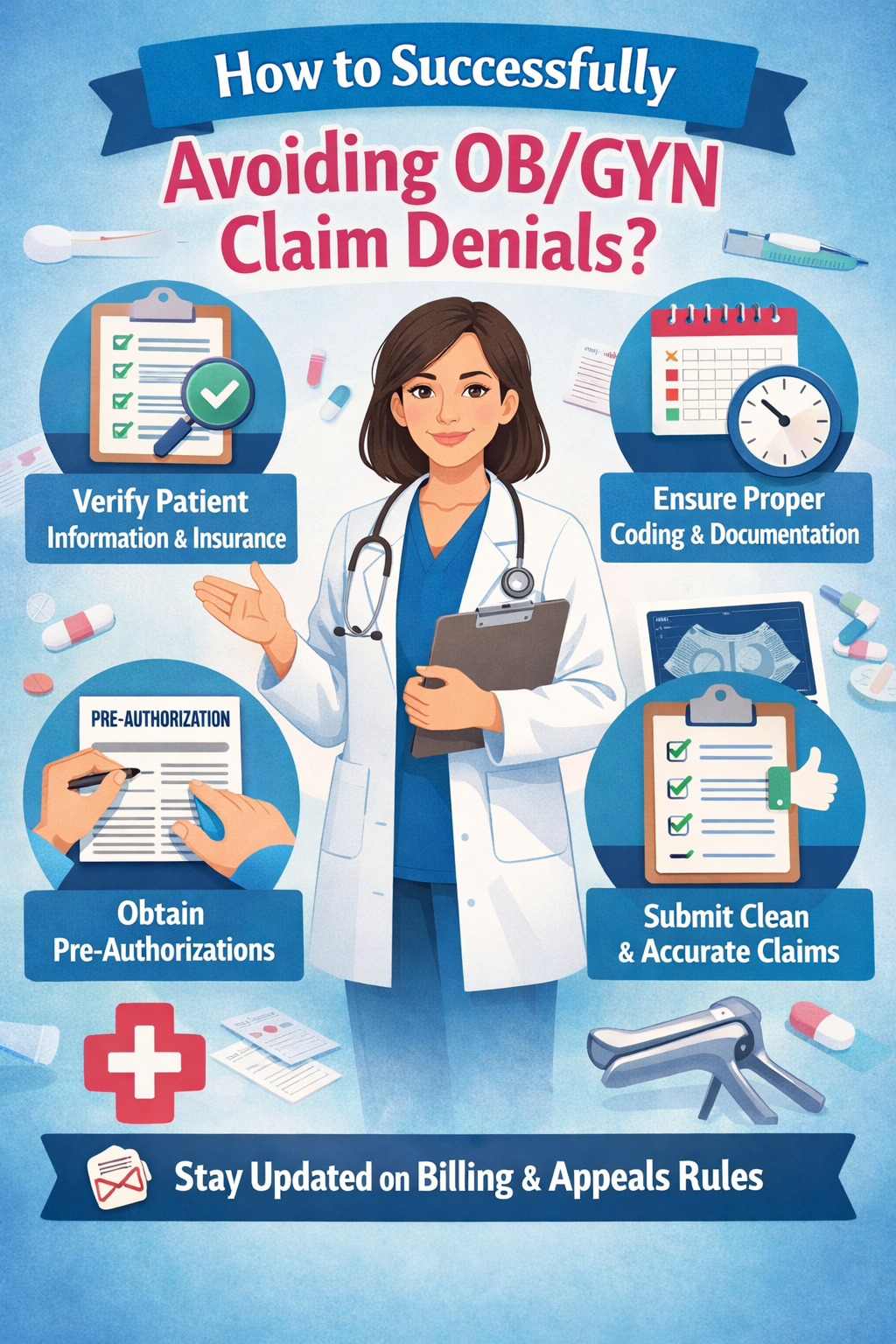

Are OB/GYN claim denials draining your practice’s revenue and slowing down your cash flow? Many healthcare providers struggle with avoiding OB/GYN claim denials, especially due to complex coding requirements, frequent policy changes, and documentation gaps. Even a small error can result in delayed payments or outright rejections.
The good news is that with the right strategies, systems, and awareness, you can significantly reduce denials and improve reimbursement rates. This guide will walk you through everything you need to know to successfully manage and prevent OB/GYN claim denials.
What is Avoiding OB/GYN Claim Denials?
Avoiding OB/GYN claim denials refers to the proactive process of ensuring that medical claims submitted for obstetrics and gynecology services are accurate, complete, and compliant with payer guidelines. It involves minimizing errors that typically lead to claim rejections or denials.
This includes:
- Correct medical coding (ICD-10, CPT, HCPCS)
- Proper documentation of procedures
- Verifying patient eligibility
- Timely claim submission
Because OB/GYN billing often includes bundled services, prenatal care packages, and surgical procedures, the margin for error is higher than in many other specialties.
Why Avoiding OB/GYN Claim Denials is Important
Failing to focus on avoiding OB/GYN claim denials can have serious financial and operational consequences.
Key Reasons It Matters:
- Revenue Loss: Denied claims delay or eliminate reimbursement.
- Increased Administrative Burden: Staff spend extra time reworking claims.
- Cash Flow Disruptions: Payments get delayed, affecting operations.
- Patient Dissatisfaction: Billing errors can frustrate patients.
For example, if a prenatal care package is billed incorrectly, insurance companies may reject the entire claim, resulting in weeks of rework.
Common Causes of OB/GYN Claim Denials
Understanding the root causes is essential for avoiding OB/GYN claim denials.
1. Incorrect Coding: OB/GYN services often require precise coding. Using outdated or incorrect codes can trigger denials.
2. Incomplete Documentation: Missing details like gestational age or procedure notes can lead to rejected claims.
3. Eligibility Issues: Failing to verify insurance coverage before services can result in non-payment.
4. Duplicate Billing: Submitting the same claim multiple times without proper correction causes denials.
5. Timely Filing Errors: Insurance companies have strict deadlines. Late submissions are automatically denied.
Step-by-Step Guide to Avoiding OB/GYN Claim Denials
Successfully avoiding OB/GYN claim denials requires a structured and consistent approach. We are going to discuss it step by step.
Step 1: Verify Patient Eligibility
The first step is to verify patient eligibility. Before any service:
- Confirm insurance coverage
- Check policy limitations
- Verify maternity benefits
Step 2: Ensure Accurate Medical Coding
After verifying patient eligibility, ensure accurate medical coding.
- Use updated ICD-10 and CPT codes
- Apply correct modifiers
- Avoid unbundling errors
Step 3: Maintain Detailed Documentation
Detailed documentation is essential. It includes:
- Patient history
- Diagnosis details
- Procedure notes
- Physician signatures
Step 4: Submit Claims on Time
- Follow payer deadlines strictly
- Use automated systems for reminders
Step 5: Conduct Regular Audits
- Review claims before submission
- Identify recurring errors
- Train staff accordingly
Step 6: Track and Analyze Denials
- Maintain a denial log
- Identify patterns
- Implement corrective actions
Benefits of Avoiding OB/GYN Claim Denials
Focusing on avoiding OB/GYN claim denials offers long-term advantages.
Key Benefits:
- Higher Revenue Collection: Fewer denials mean faster payments
- Improved Efficiency: Less time spent on rework
- Better Compliance: Reduced risk of audits and penalties
- Enhanced Patient Trust: Transparent and accurate billing
A well-managed billing process can increase reimbursement rates by up to 20–30%.
Risks of Poor Denial Management
Ignoring denial prevention can lead to serious issues:
- Increased claim rejection rates
- Financial instability
- Staff burnout
- Compliance risks
For instance, repeated coding errors can trigger payer audits, putting your entire practice under scrutiny.
Common Mistakes to Avoid
Even experienced practices make mistakes when avoiding OB/GYN claim denials.
Frequent Errors:
- Using outdated codes: Medical coding updates frequently
- Skipping eligibility checks: Leads to non-covered claims
- Poor documentation: Missing key details causes rejections
- Ignoring denial trends: Failing to learn from past errors
- Overlooking payer rules: Each insurer has unique requirements
Myth vs Reality:
- Myth: Denials are unavoidable
- Reality: Most denials are preventable with proper processes
When to Take Action
If you notice any of the following, it’s time to improve your denial management strategy:
- Denial rates exceeding 5–10%
- Frequent coding errors
- Delayed reimbursements
- Increased administrative workload
Taking early action helps prevent long-term financial damage and improves operational efficiency.
Cost, Time, and Expectations
Cost
Investing in better billing systems or outsourcing may have upfront costs, but it significantly reduces revenue loss over time.
Time
Implementing a strong denial prevention strategy can take a few weeks to months, depending on practice size.
Expectations
- Reduction in denial rates within 60–90 days
- Improved claim acceptance rates
- Better financial stability
Key Insights for Long-Term Success
To consistently succeed in avoiding OB/GYN claim denials:
- Invest in staff training
- Use advanced billing software
- Stay updated with coding changes
- Build strong communication with payers
Adopting a proactive mindset rather than a reactive approach is the key to long-term success.
Conclusion
Avoiding OB/GYN claim denials is not just about fixing errors—it’s about preventing them before they occur. By focusing on accurate coding, thorough documentation, timely submissions, and continuous monitoring, healthcare providers can significantly reduce denials and improve revenue cycle performance. In today’s competitive healthcare environment, efficient billing is essential for sustainability and growth. Implementing the strategies outlined in this guide will help you streamline your operations and ensure consistent financial success.
How Medicalbillingg Supports Healthcare Providers
Medicalbillingg is your trusted partner for streamlining healthcare revenue cycle management with accuracy and efficiency. We specialize in end-to-end medical billing services that help practices reduce claim denials, accelerate reimbursements, and maximize revenue. Our expert team stays up-to-date with the latest industry regulations to ensure compliance and error-free processing. By outsourcing your billing to Medicalbillingg, you can focus more on patient care while we handle every aspect of your billing process.
- Accurate medical coding and timely claims submission
- Faster reimbursements with reduced denial rates
- Complete revenue cycle management solutions
- Transparent reporting and real-time performance tracking
- Dedicated support team for consistent follow-ups
With a commitment to reliability, transparency, and results, Medicalbillingg empowers healthcare providers to achieve financial stability and long-term growth.
Frequently Asked Questions (FAQs)
1. How can I start avoiding OB/GYN claim denials in my practice?
Start by reviewing your current billing process, identifying common errors, and implementing checks for coding, documentation, and eligibility verification. Training your staff and using updated billing software can also significantly reduce errors and improve claim acceptance rates over time.
2. What are the most common reasons for OB/GYN claim denials?
The most common reasons include incorrect coding, incomplete documentation, eligibility issues, duplicate billing, and late claim submissions. Addressing these areas proactively can help reduce denial rates and improve overall billing efficiency.
3. How long does it take to reduce claim denials?
With consistent effort and proper systems in place, you can start seeing improvements within 60 to 90 days. However, long-term success depends on continuous monitoring, staff training, and adapting to changing payer requirements.
4. Is outsourcing billing helpful in avoiding OB/GYN claim denials?
Yes, outsourcing to experienced billing providers can help minimize errors, ensure compliance, and improve claim accuracy. It allows healthcare providers to focus on patient care while experts manage complex billing processes effectively.
5. What tools help in avoiding OB/GYN claim denials?
Tools like electronic health records (EHR), billing software, claim scrubbing systems, and denial tracking tools are essential. These tools automate processes, reduce manual errors, and provide valuable insights for improving billing performance.
Are you a healthcare professional, medical coder, or billing specialist with valuable insights to share? We welcome expert contributors to join our platform and help educate the medical community. Write for Us medicalbillingg and get your content featured on our medical billing resource hub.