
Introduction
How secure is your healthcare data in today’s digital world? With hospitals, clinics, and healthcare providers increasingly relying on electronic systems, patient information is more vulnerable than ever. A single data breach can expose sensitive medical records, financial details, and personal identities—leading to serious consequences for both patients and providers.
Healthcare data security is no longer optional—it’s a necessity. Whether you’re a healthcare professional, administrator, or patient, understanding how to protect patient information is critical. In this guide, we’ll explore 7 essential steps to protect healthcare data, along with risks, benefits, and actionable insights to help you stay secure.
What Is Healthcare Data Security?
Healthcare data security refers to the protection of sensitive patient information from unauthorized access, theft, or misuse. This includes:
- Electronic Health Records (EHRs)
- Medical histories
- Billing and insurance details
- Personal identification information
Healthcare organizations use a combination of technical, administrative, and physical safeguards to ensure data remains confidential, accurate, and accessible only to authorized individuals.
Why Is Healthcare Data Security Important?
Protecting healthcare data is crucial for several reasons:
1. Patient Privacy
Patients trust healthcare providers with their most sensitive information. A breach can violate that trust and harm patient relationships.
2. Legal Compliance
Regulations like HIPAA (in many countries, similar data protection laws exist) require strict data protection measures. Non-compliance can lead to heavy penalties.
3. Financial Protection
Data breaches can cost organizations millions in fines, lawsuits, and recovery efforts.
4. Reputation Management
A single cyberattack can damage a healthcare provider’s credibility and long-term reputation.
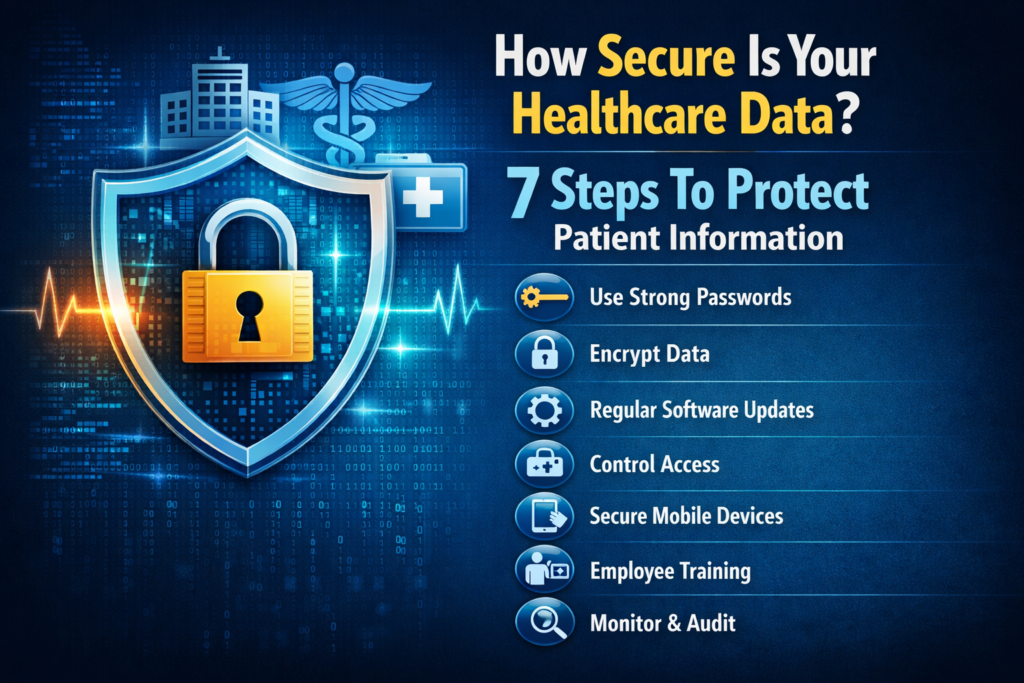
7 Steps To Protect Patient Information
Now we are going to discuss 7 essential steps to protect patient information.
Step 1: Implement Strong Access Controls
Limit access to patient data based on roles and responsibilities.
Best practices:
- Use unique login credentials for each employee
- Apply role-based access control (RBAC)
- Regularly review access permissions
This ensures that only authorized personnel can view or modify sensitive data.
Step 2: Use Data Encryption
Encryption converts data into unreadable code unless accessed with a decryption key.
Apply encryption to:
- Stored data (at rest)
- Data being transmitted (in transit)
Even if hackers gain access, encrypted data remains useless without proper authorization.
Step 3: Regularly Update Software and Systems
Outdated systems are a major vulnerability in healthcare data security.
What to do:
- Install updates and patches promptly
- Replace legacy systems when necessary
- Use secure and trusted software platforms
Regular updates close security gaps that cybercriminals often exploit.
Step 4: Train Staff on Data Security
Human error is one of the leading causes of data breaches.
Training should include:
- Recognizing phishing emails
- Secure password practices
- Safe handling of patient information
Well-trained staff act as the first line of defense against cyber threats.
Step 5: Perform Regular Security Audits
Routine audits help identify vulnerabilities before attackers do.
Include:
- Risk assessments
- Penetration testing
- Compliance checks
Audits ensure your systems remain secure and up-to-date with current standards.
Step 6: Backup Data Frequently
Data backups protect against data loss due to cyberattacks, system failures, or disasters.
Best practices:
- Use automated backup systems
- Store backups in secure, offsite locations
- Test backup recovery regularly
This ensures business continuity even in worst-case scenarios.
Step 7: Implement Multi-Factor Authentication (MFA)
MFA adds an extra layer of security beyond passwords.
Examples include:
- One-time codes sent to mobile devices
- Biometric verification (fingerprint, facial recognition)
Even if login credentials are compromised, MFA prevents unauthorized access.
Benefits of Strong Healthcare Data Security
Implementing these steps offers several advantages:
- Enhanced patient trust and satisfaction
- Reduced risk of cyberattacks
- Regulatory compliance and avoidance of penalties
- Improved operational efficiency
- Better data integrity and accuracy
A secure system not only protects data but also strengthens the entire healthcare ecosystem.
Risks of Poor Data Protection
Failing to secure healthcare data can lead to:
- Data breaches and identity theft
- Financial losses and legal consequences
- Loss of patient trust
- Operational disruptions
- Damage to organizational reputation
In severe cases, compromised data can even affect patient safety.
Key Insights for Better Data Protection
- Cyber threats are constantly evolving—security must evolve too
- Technology alone isn’t enough—people and processes matter equally
- Prevention is far more cost-effective than recovery
- Small healthcare providers are also prime targets for cyberattacks
Common Mistakes
Mistake 1: “We’re Too Small to Be Targeted”
Many small clinics believe hackers only target large hospitals. In reality, smaller organizations often have weaker security, making them easier targets.
Mistake 2: Weak Password Policies
Using simple or repeated passwords increases vulnerability. Strong, unique passwords are essential.
Mistake 3: Ignoring Employee Training
Even the best systems can fail if staff are unaware of security risks.
Mistake 4: Not Updating Systems
Delaying updates leaves systems exposed to known vulnerabilities.
When to Take Action
You should immediately improve your healthcare data security if:
- You haven’t conducted a security audit in the past year
- Your systems rely on outdated software
- Staff lack proper cybersecurity training
- You store sensitive data without encryption
You’ve experienced a past data breach
Early action can prevent costly and damaging incidents.
Cost, Time, and Expectations
Cost
- Basic security measures can be affordable
- Advanced systems may require higher investment
- However, prevention is cheaper than dealing with a breach
Time
- Initial setup may take weeks
- Ongoing maintenance is continuous
Expectations
- No system is 100% secure
- The goal is to minimize risk and respond effectively to threats
Advanced Insights: Future of Healthcare Data Security
The future of healthcare data protection is driven by innovation:
- Artificial Intelligence (AI): Detects unusual activity in real time
- Blockchain Technology: Ensures secure and transparent data sharing
- Cloud Security Enhancements: Provides scalable and secure storage solutions
- Zero Trust Architecture: Requires verification at every access point
Healthcare organizations adopting these technologies are better prepared for modern cyber threats.
Conclusion
Healthcare data security is no longer a luxury—it’s a critical responsibility. With rising cyber threats and increasing reliance on digital systems, protecting patient information must be a top priority. By following these 7 steps to protect patient information, healthcare providers can significantly reduce risks, build patient trust, and ensure compliance with regulations.
How Medicalbillingg Supports Healthcare Providers?
Medicalbillingg is your trusted partner for efficient and reliable medical billing solutions, designed to help healthcare providers maximize revenue while minimizing administrative stress. With a strong focus on accuracy, compliance, and timely claim submissions, Medicalbillingg helps practices achieve smoother financial operations and consistent cash flow.
- Faster claim processing and reduced denials
- Improved revenue cycle management
- Strict compliance with latest healthcare regulations
- Customized solutions for clinics and hospitals
- Dedicated support to handle billing complexities
By choosing Medicalbillingg, you can focus more on delivering quality patient care while experts handle your billing with precision and professionalism.
FAQs (Frequently Asked Questions)
1. How secure is healthcare data today?
Healthcare data security varies by organization, but many systems are still vulnerable due to outdated technology and human error. Regular updates and staff awareness programs can significantly improve overall data protection.
2. What is the biggest threat to patient information?
Cyberattacks like phishing, ransomware, and insider threats are among the biggest risks to patient information. These threats continue to evolve, making continuous monitoring and security updates essential.
3. How can small clinics protect patient data?
They can use encryption, staff training, secure passwords, and regular backups to improve security and protect patient data. Implementing basic cybersecurity policies can greatly reduce the risk of data breaches.
4. Is cloud storage safe for healthcare data?
Yes it is safe, if it uses strong encryption, access controls, and complies with healthcare regulations.
Choosing a reputable cloud provider is also crucial for ensuring data safety and reliability.
5. How often should security audits be conducted?
Security audits should be conducted at least once a year, or more frequently depending on the organization’s size and risk level. Regular audits help identify vulnerabilities before they can be exploited.
6. What to do after a data breach?
You should immediately secure systems, notify affected individuals, investigate the cause, and strengthen security measures. Taking quick actions helps minimize damage and prevents future incidents.
Are you a healthcare professional, medical coder, or billing specialist with valuable insights to share? We welcome expert contributors to join our platform and help educate the medical community. Write for Us medicalbillingg medical billing and get your content featured on our medical billing resource hub.