
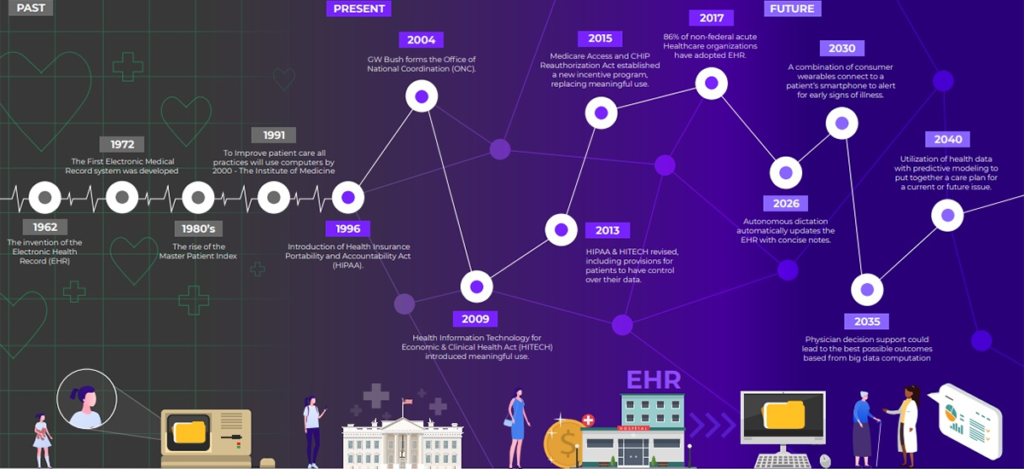
Healthcare has changed dramatically over the past few decades, especially in how patient information is recorded, stored, and used. There was a time when hospitals relied completely on paper charts stacked in cabinets and folders. Today, most healthcare providers depend on digital systems that organize patient data, support clinical decisions, and improve efficiency. This shift from paper records to electronic medical records and modern EHR software has transformed the entire healthcare ecosystem.
In this article, we will explore how health records evolved, what drove this change, the role of advancements in technology, and how digital records connect with services such as billing, coding, and administrative workflows including partnerships with the best medical billing company and organizations outsourcing medical billing services.
Understanding Electronic Health Records
Electronic Health Records (EHRs) are digital versions of patient medical histories maintained by healthcare providers. These systems store essential health data such as:
- Patient demographics
- Medical history
- Diagnoses and treatment plans
- Medications and allergies
- Lab results and imaging reports
- Billing and insurance details
While many people use the terms interchangeably, electronic medical records typically refer to the digital record within a single clinic or practice, whereas EHR systems allow information to be shared across hospitals, specialists, labs, and other healthcare providers.
Modern EHR software is designed not only to store information but also to improve coordination of care, reduce errors, and streamline clinical workflows.
The Early Days: Paper-Based Medical Records
Before digital systems existed, patient records were fully manual. Doctors wrote notes on paper files, and hospital staff organized records in physical storage rooms. While this system worked for many years, it had several limitations.
Major Challenges of Paper Records
Limited accessibility
A patient file could only be in one place at a time. If another doctor needed it, staff had to physically locate and deliver it.
High risk of errors
Handwritten notes were sometimes difficult to read, which could lead to misunderstandings in diagnosis or treatment.
Data loss and damage
Paper records could be lost, misplaced, or damaged by fire, water, or aging.
Slow administrative processes
Tasks such as insurance verification, coding, and billing took longer because staff had to manually review charts.
Difficult data analysis
Hospitals could not easily track health trends or patient outcomes since records were not stored digitally.
These limitations created the need for a more efficient system, paving the way for digital transformation in healthcare.
The Transition Toward Electronic Medical Records
The first wave of electronic medical records began in the late twentieth century when hospitals started experimenting with computerized systems. Early digital records were simple databases used mainly for storing patient details.
However, the shift was not immediate. Healthcare organizations faced several barriers:
- High implementation costs
- Limited computer infrastructure
- Lack of standardized systems
- Resistance from medical staff
- Concerns about data security
Despite these challenges, the benefits gradually became clear. Digital records improved documentation, reduced paperwork, and made information easier to retrieve.
Role of Advancements in Technology
One of the biggest drivers behind modern EHR adoption is the continuous progress in advancements in technology. Over time, several innovations helped transform basic record systems into powerful healthcare platforms.
Cloud Computing in Healthcare
Cloud-based EHR systems allow healthcare providers to access patient records securely from multiple locations. This improves collaboration among doctors, nurses, and specialists.
Artificial Intelligence and Data Analytics
Modern EHR platforms now use analytics to identify patterns, predict risks, and support clinical decision-making. AI tools can help detect diseases earlier and recommend treatment options.
Integration With Medical Devices
Today’s healthcare technology allows EHR systems to integrate with lab systems, imaging tools, and monitoring devices. Patient data can be updated automatically without manual entry.
Mobile Access for Healthcare Professionals
Doctors can now review patient records, prescriptions, and test results through mobile devices, making healthcare faster and more responsive.
These advancements in technology have made EHR systems essential for modern healthcare operations.
How EHR Software Improves Healthcare Delivery
The adoption of EHR software has improved healthcare in several ways. Beyond record keeping, these systems support clinical care, communication, and operational efficiency.
Better Patient Care
Digital records give doctors a complete view of a patient’s medical history. This helps in making more accurate diagnoses and treatment decisions.
Improved Coordination Among Providers
When patient data is shared between departments and specialists, care becomes more connected and efficient.
Reduced Medical Errors
Electronic prescriptions, alerts for allergies, and automated reminders help minimize mistakes in treatment or medication.
Faster Access to Information
Healthcare professionals can quickly find patient records instead of searching through physical files.
Enhanced Patient Engagement
Many EHR platforms include patient portals where individuals can view test results, schedule appointments, and communicate with doctors.
The Connection Between EHR Systems and Medical Billing
Digital health records are closely connected to the revenue cycle of healthcare organizations. Accurate documentation in EHR systems helps ensure proper coding and billing.
Healthcare providers often collaborate with the best medical billing company to manage claims, insurance submissions, and payment processing efficiently.
EHR systems support billing by:
- Automating coding processes
- Reducing claim errors
- Improving documentation accuracy
- Speeding up reimbursement cycles
- Supporting compliance with healthcare regulations
When documentation is clear and organized, billing becomes more accurate and efficient.
Why Healthcare Providers Are Outsourcing Medical Billing Services
As healthcare systems become more complex, many hospitals and clinics are outsourcing medical billing services to specialized companies. This approach helps providers focus more on patient care while experts handle administrative tasks.
Benefits of Outsourcing Billing
Cost efficiency
Outsourcing reduces the need for large in-house billing teams and training costs.
Expert knowledge
Billing companies stay updated with coding regulations, insurance policies, and claim requirements.
Faster claim processing
Experienced billing professionals can reduce claim denials and speed up payments.
Integration with EHR systems
Many billing providers integrate directly with EHR platforms, ensuring smooth workflow between patient documentation and financial operations.
Improved revenue cycle management
Accurate billing leads to better financial stability for healthcare practices.
This is why many healthcare organizations now partner with the best medical billing company to manage their billing operations alongside EHR systems.
Key Features of Modern EHR Software
Today’s EHR software offers a wide range of features designed to support both clinical and administrative tasks.
Some important features include:
- Electronic prescribing systems
- Clinical decision support tools
- Patient scheduling and management
- Lab and imaging integration
- Telehealth compatibility
- Secure patient portals
- Automated billing and coding support
These capabilities show how far healthcare technology has come from simple paper charts.
Challenges in EHR Implementation
Even though digital records provide many advantages, adopting EHR systems can still present challenges.
High Initial Costs
Implementing a complete EHR system requires investment in software, infrastructure, and staff training.
Training and Adaptation
Doctors and healthcare staff need time to learn new systems and workflows.
Data Security Concerns
Protecting patient information is critical. Healthcare providers must follow strict security standards and privacy regulations.
System Integration Issues
Sometimes healthcare organizations use different software systems that may not integrate easily.
Despite these challenges, the long-term benefits of electronic medical records usually outweigh the difficulties.
The Future of Electronic Health Records
The future of EHR systems is closely linked to ongoing advancements in technology. Healthcare is expected to become more connected, intelligent, and patient-centered.
Several trends are shaping the future of EHR systems:
Artificial Intelligence Driven Healthcare
AI will help analyze patient data more effectively, identify potential risks, and assist doctors in treatment planning.
Interoperability Between Systems
Future EHR platforms will allow seamless sharing of patient data between hospitals, clinics, labs, and insurance providers.
Personalized Medicine
Digital records combined with genetic and health data will help create personalized treatment plans for patients.
Expansion of Telemedicine
EHR systems will continue integrating with telehealth platforms to support remote consultations and virtual care.
Blockchain for Data Security
Some healthcare innovators are exploring blockchain technology to improve security and protect sensitive patient data.
These developments indicate that EHR systems will continue evolving and playing a central role in healthcare.
Why Digital Health Records Matter Today
The move from paper charts to digital systems has improved healthcare delivery in many ways. With electronic medical records, healthcare providers can work more efficiently, collaborate better, and offer improved patient care.
Modern EHR software also supports healthcare operations beyond clinical care, including billing, coding, and administration. When combined with reliable partners such as the best medical billing company and organizations outsourcing medical billing services, healthcare providers can streamline both patient care and financial management.
As technology continues to evolve, digital health records will remain an essential part of modern healthcare systems worldwide.