
Healthcare runs on data. From patient demographics to insurance claims, every step depends on accurate and timely information. Years ago, this information moved slowly through paper forms, faxes, and phone calls. That system was expensive, error-prone, and frustrating for providers, billing teams, and patients alike. This is where Electronic Data Interchange (EDI) in healthcare changed everything.
Today, EDI is the backbone of medical billing and insurance communication. It quietly handles millions of transactions every day, ensuring that claims are submitted correctly, payments are processed faster, and providers maintain a steady revenue flow. Understanding how EDI works is essential for anyone involved in healthcare administration, billing, or revenue cycle management.
This guide explains what Electronic Data Interchange (EDI) in healthcare is, how it works step by step, and why it plays such a critical role in modern medical billing operations.
What Is Electronic Data Interchange (EDI) in Healthcare?
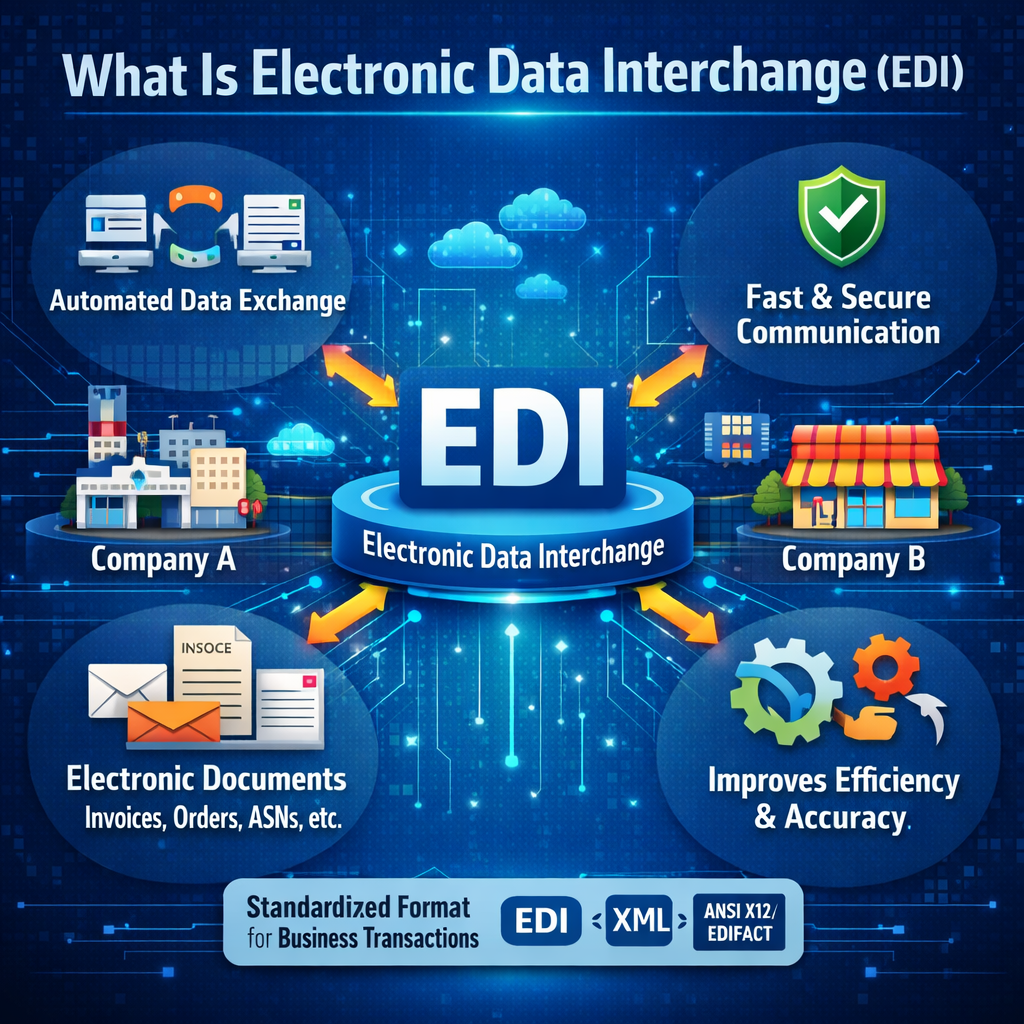
Electronic Data Interchange (EDI) in healthcare refers to the structured electronic exchange of healthcare and insurance data between providers, payers, and other entities using standardized formats. Instead of sending paper forms or unstructured files like PDFs, EDI allows systems to “talk” to each other in a language they both understand.
In simple terms, EDI replaces manual data entry with automated data transmission. The information sent through EDI is organized, validated, and formatted according to industry standards, making it readable by receiving systems without human intervention.
Unlike emails or scanned documents, EDI data is not meant to be read by people. It is designed for computer systems to process quickly and accurately. This is why EDI is so effective in high-volume environments like healthcare billing, where even small errors can delay payments or lead to claim denials.
Why Electronic Data Interchange Matters in Healthcare
Healthcare organizations handle massive amounts of data every day. Patient visits, diagnostic tests, procedures, and follow-ups all generate information that must be shared with insurance companies for reimbursement. Without EDI, managing this volume efficiently would be nearly impossible.
One of the biggest reasons EDI in healthcare is essential is speed. Insurance claims that once took weeks to process can now move through the system in days or even hours. Automated eligibility checks prevent billing issues before services are rendered, and electronic remittance advice allows faster payment posting.
Accuracy is another major benefit. EDI transactions follow strict formatting and validation rules, reducing human errors such as missing fields, incorrect codes, or mismatched patient information. For medical billing teams, this means fewer rejected claims and less time spent on rework.
From a compliance perspective, EDI also supports HIPAA requirements by using approved transaction standards and secure transmission methods. This ensures sensitive healthcare data remains protected while moving between systems.
Common EDI Transactions Used in Healthcare
Electronic Data Interchange is not a single transaction. It includes a range of standardized transactions, each designed for a specific purpose within the healthcare revenue cycle.
Eligibility and Benefits Verification (270/271)
Before providing services, healthcare providers need to confirm a patient’s insurance coverage. The 270 eligibility request is sent to the payer, and the 271 response returns coverage details such as active status, copays, deductibles, and limitations.
This process helps front-desk and billing teams avoid surprises, reduces patient disputes, and ensures accurate billing from the start.
Healthcare Claims Submission (837)
The 837 claim transaction is one of the most important EDI transactions in medical billing. It is used to submit healthcare claims electronically to insurance payers.
There are different versions depending on the type of provider, including professional, institutional, and dental claims. By using standardized formats, EDI ensures claims include all required data elements, reducing the risk of rejections.
Claim Status Inquiry (276/277)
Instead of calling insurance companies to check claim status, billing teams use the 276 request to ask for updates. The 277 response provides information about whether a claim is received, under review, paid, or denied.
This transaction improves transparency and saves valuable staff time.
Electronic Remittance Advice (835)
The 835 transaction, also known as Electronic Remittance Advice (ERA), explains how a claim was processed and how much was paid. It includes payment amounts, adjustments, denial reasons, and patient responsibility details.
For medical billing professionals, ERAs make payment posting faster and more accurate, especially when integrated with practice management software.
Prior Authorization Requests (278)
Many services require prior approval from insurance companies. The 278 transaction allows providers to request and receive authorization electronically, reducing delays and manual paperwork.
EDI Standards Used in Healthcare
Standardization is what makes Electronic Data Interchange possible. Without agreed-upon formats, systems would not be able to interpret shared data correctly.
ANSI X12 Standards
In the United States, most healthcare EDI transactions follow ANSI X12 standards. These standards define the structure and data elements for each transaction type, such as claims, eligibility checks, and remittance advice.
HIPAA mandates the use of specific X12 transaction sets for electronic healthcare transactions, making compliance non-negotiable for covered entities.
EDI vs HL7
EDI and HL7 are often mentioned together, but they serve different purposes. EDI focuses on administrative and financial transactions, such as billing and insurance communication. HL7, on the other hand, is primarily used for clinical data exchange, such as lab results and patient records.
Both standards work together to support complete healthcare interoperability.
How Electronic Data Interchange Works in Healthcare
Understanding how EDI works in healthcare becomes easier when broken down into steps.
Data Creation at the Provider Level
Everything starts at the provider’s office or facility. Patient information, insurance details, diagnoses, and procedure codes are entered into an electronic health record or practice management system.
Accuracy at this stage is critical. Incorrect data will follow the transaction through the system and may lead to claim rejections or payment delays.
Data Formatting and Mapping
Once data is collected, it must be translated into EDI format. This process is known as mapping. Internal system data fields are matched to standardized EDI segments required by the transaction type.
Validation checks ensure required fields are present and formatted correctly before transmission.
Transmission Through Clearinghouses
Most providers use a healthcare clearinghouse to transmit EDI transactions. Clearinghouses act as intermediaries between providers and payers.
They review claims for errors, apply payer-specific rules, and route transactions to the correct insurance company. This extra layer significantly improves claim acceptance rates.
Payer Processing
Insurance companies receive EDI transactions and process them using automated systems. Claims are reviewed, priced, and adjudicated based on policy rules and coverage details.
Responses such as acknowledgments, rejections, or payment information are generated and sent back through EDI.
Receiving Responses and Posting Payments
Providers receive EDI responses, including claim status updates and remittance advice. Billing teams use this information to post payments, follow up on denials, and manage accounts receivable efficiently.
Role of Clearinghouses in Healthcare EDI
Clearinghouses play a central role in the success of Electronic Data Interchange. They reduce complexity by handling multiple payer connections through a single interface.
For medical billing companies and healthcare practices, clearinghouses provide claim scrubbing, error reporting, and compliance support. They also adapt to payer-specific changes, allowing providers to focus on patient care rather than technical details.
Choosing the right clearinghouse can have a direct impact on clean claim rates, reimbursement speed, and overall revenue cycle performance.
Benefits of Electronic Data Interchange in Healthcare
The advantages of EDI in healthcare extend across clinical, administrative, and financial operations.
One of the most noticeable benefits is faster claims processing. Electronic submissions move quickly through payer systems, leading to faster reimbursements and improved cash flow.
EDI also reduces administrative costs by minimizing manual tasks such as data entry, printing, and mailing. Over time, these savings can be substantial.
Error reduction is another key advantage. Standardized formats and automated validation help prevent common billing mistakes that lead to denials.
From a patient perspective, EDI improves transparency and accuracy in billing, resulting in fewer disputes and a better overall experience.
Challenges and Limitations of EDI
Despite its benefits, EDI is not without challenges. Implementation can require upfront investment in software, training, and system integration.
Data mapping issues and payer-specific rules can also create complexity, especially for organizations working with multiple insurance carriers.
EDI error codes can be confusing, and resolving rejections requires knowledgeable billing staff. Ongoing monitoring and updates are essential to keep systems running smoothly.
EDI Security and HIPAA Compliance
Healthcare data is highly sensitive, making security a top priority. EDI transactions use secure transmission methods such as encrypted connections and secure file transfer protocols.
HIPAA requires safeguards to protect electronic protected health information. Proper EDI systems support these requirements by controlling access, tracking transactions, and ensuring data integrity.
EDI vs Manual Billing
When comparing EDI-based billing to manual processes, the difference is clear. Manual billing is slower, more expensive, and more prone to errors.
EDI allows healthcare organizations to scale operations, handle higher claim volumes, and maintain compliance without increasing staff workload. For growing practices and billing companies, EDI is not optional. It is essential.
The Role of EDI in Revenue Cycle Management
Electronic Data Interchange plays a critical role in revenue cycle management. From eligibility verification to final payment posting, EDI supports every stage of the billing lifecycle.
By improving clean claim rates and reducing accounts receivable days, EDI helps healthcare organizations maintain financial stability and predictable cash flow.
The Future of EDI in Healthcare
While new technologies such as APIs and real-time data exchange are emerging, EDI remains deeply embedded in healthcare infrastructure. Many of these new tools build on existing EDI frameworks rather than replacing them.
Automation, artificial intelligence, and advanced analytics are expected to further enhance EDI workflows, making transactions faster and more accurate.
Getting Started With EDI in Healthcare
For organizations new to EDI, the first step is assessing operational needs. Selecting the right EDI software and clearinghouse partner is critical.
Proper testing, staff training, and ongoing performance monitoring help ensure a smooth
Conclusion
Electronic Data Interchange (EDI) in healthcare is the foundation of modern medical billing and insurance communication. It streamlines workflows, improves accuracy, supports compliance, and strengthens revenue cycle management.
For healthcare providers and medical billing professionals, understanding EDI is no longer optional. It is a core operational requirement that directly impacts efficiency, financial health, and patient satisfaction.
As healthcare continues to evolve, EDI will remain a vital tool, quietly powering the systems that keep care accessible, affordable, and sustainable.
Compliance and financial performance are compulsory, so partnering with an experienced medical billing company like MedicalBillingg ensures that no detail slips through the cracks. With accurate coding, timely submissions, and constant follow-up, healthcare providers can focus on what they do best—treating patients, while billing professionals handle the complexity behind the scenes.